Elem. – Who HQ: The 50 States (Series NF)

Who HQ: The 50 States. Penguin Workshop, 2025. 50 p. $15.69 ea. $235.35 set of 22. Upper Elementary. 

Marino Walters, Jennifer. Where is California? 979-8-217-05129-8.
—. Where is Florida? 979-8-217-05138-0.
—. Where is Georgia? 979-8-217-05153-3. 
—. Where is New York? 979-8-217-05141-0.
Vonder Brink, Tracy. Where is Illinois? 979-8-217-05147-2. 
—. Where is Ohio?
979-8-217-05150-2.
Whipple, Annette. Where is Pennsylvania? 979-8-217-05144-1.
—. Where is Texas? 979-8-217-05132-8. 

Part of the Who HQ: The 50 States series, this brief survey of the history of Pennsylvania will support students’ learning. Beginning with the debt King Charles II of England paid off by giving forty thousand square miles of land to William Penn, this survey covers a lot of information and concludes in the present day. Backmatter includes Pennsylvania state symbols, a timeline of Pennsylvania, and a helpful bibliography. New titles are a fresh addition to the Who HQ series.

THOUGHTS: An up-to-date resource for celebrating the 250th anniversary of the United States and for teaching about U.S. History and Geography. Teachers will appreciate the honest description of the poor treatment of the Lenape Nation when establishing the Pennsylvania Colony. A sure bet for classrooms and libraries where the WHO HQ series are popular.

974.8 General Pennsylvania History

YA – Hick: The Trailblazing Journalist Who Captured Eleanor Roosevelt’s Heart

Miller, Sarah. Hick: The Trailblazing Journalist Who Captured Eleanor Roosevelt’s Heart. Random House Studio, 2025. 978-0-593-64909-1. 384 p. $20.99. Grades 8-12.

Lorena “Hick” Hickock was a fascinating person in her own right, long before she became one of Eleanor Roosevelt’s most important relationships, as this biography illustrates. From her early years when she pulled herself out of multiple traumatic and toxic situations, to her formative time as a journalist breaking gender expectations, her story is compelling and inspirational. And then of course, her love story is absolutely enthralling. 

THOUGHTS: Accessibly written, and meticulously researched, this is nonfiction that is hard to put down. It won’t always be an easy sell to students looking for pleasure reading, but it should absolutely be on Reading Olympics lists, or offered as a summer reading option. It’s one of those books that once you’ve read it, you want to tell everyone about it. 

Biography
070.92 History and Biography of Journalism and Newspapers

Elem. – Technology Then and Now (Series NF)

MacCarald, Clara. Wonder Books: Technology Then and Now. The Child’s World, 2025. 24 p. $23.00 ea. $138.00 set of 8. Grades K-3.

Airplanes Then and Now. 978-1-503-88949-1.
Cars Then and Now. 978-1-503-88950-7.
Computers Then and Now.
978-1-503-88951-4.
Telephones Then and Now. 978-1-503-88952-1.
Television Then and Now. 978-1-503-88953-8.
Trains Then and Now. 978-1-503-88954-5.

Airplanes Then and Now provides an interesting history of airplanes, flight technology, and the future of flying. Excellent color photographs match the text with helpful sidebars and labels. This nonfiction book includes a table of contents, fast facts, glossary, and index. Two additional sections called “Wonder More” and “Find Out More” offer excellent opportunities for further inquiry. This series is fresh and up-to-date and includes a discussion of electric planes.

THOUGHTS: Readers will enjoy this brief, but comprehensive overview of the history of airplanes. Teachers will appreciate the additional resources provided by the “Find Out More” section and the excellent guiding questions in the “Wonder More” section at the back of the book.

629.133 Aircraft Types

YA – White House Secrets: Medical Lies and Cover-Ups

Jarrow, Gail. White House Secrets: Medical Lies and Cover-Ups. Calkins Creek, 2025. 978-1-662-68103-5. 283 p. $24.99. Grades 7-12.

White House Secrets: Medical Lies and Cover-Ups tells the stories of presidents who hid a medical crisis from the American public, often with the help of aides, family, doctors, and even the press. After the Civil War, the influence of the president grew along with the expansion of the federal government. News began to travel faster through media such as newspapers, radio, television, and (eventually) the internet. As interest in the presidents and their fitness for office increased, so did lies about presidential ailments. Author Gail Jarrow reveals the medical conditions of nine presidents and how information about their health was – and wasn’t – shared with the public. James Garfield’s ultimately fatal gunshot wound infection was concealed behind upbeat reports from his doctors. Franklin Roosevelt’s public appearances and photographs were carefully manipulated to hide his paralysis. John Kennedy’s medical team went to great lengths to hide his Addison’s Disease diagnosis. Ronald Reagan’s recovery from an assassination attempt was far more perilous than the public was led to believe. Each chapter includes some presidential trivia: Warren Harding was the first president to have his voice broadcast over the radio, in May of 1922! Jarrow also includes a sidebar chapter, “The Next in Line,” which focuses on the Presidential Succession Acts and the Twenty-Fifth Amendment to the Constitution. Plenty of photographs, editorial cartoons, headlines, and useful captions add helpful details throughout the book. Finally, Jarrow poses questions about the White House and its history of medical secrets; for example, “Is the president’s right to privacy more important than the public’s right to know medical details?” 

THOUGHTS: White House Secrets is an absolutely fascinating take on presidential history through the lens of the president’s ability to execute his duties and the public’s right to access accurate information about their elected leader.

973 American History

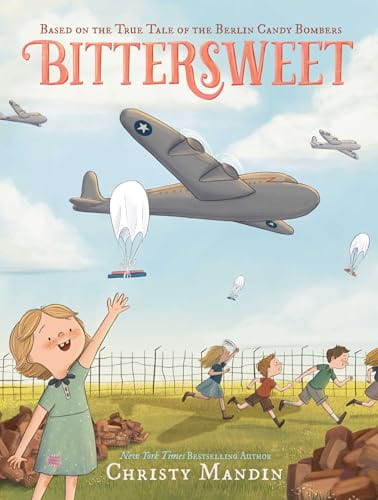
Elem. – Bittersweet: Based on the True Tale of the Berlin Candy Bombers

Mandin, Christy. Bittersweet: Based on the True Tale of the Berlin Candy Bombers. Margaret K. McElderry Books, 2025. 978-1-665-96058-8. Unpaged. $19.99. Grades 2-4.

A nonfiction picture book based on the true story of “Operation Little Vittles,” when American pilot Gail Halvorsen started a program to deliver bundles of candy to Berlin’s children. World War II had ended, and Germany was divided. Food and supplies were blocked from reaching the west by land, so Great Britain and America decided to air drop supplies. Halvorsen saw an opportunity to show kindness and caring to the children of war-torn Berlin by dropping little packages of candy just for them. Halvorsen became the “Berlin Candy Bomber” and was recognized as a national hero for his kindness.

THOUGHTS: A touching, true story that highlights the innocent children caught in the cross fire of war and destruction. Mandin writes a heartfelt author’s note making an important connection to the children of all wars, including current conflicts across the globe today. The author asks us to choose kindness and see others as ourselves. The illustrations are soft and timeless and help reinforce the story’s message of caring for all children.

943 Germany and Neighboring Central European Countries
Picture Book

MG – Baffling Behavior in the Past

Neatherland, Noah. Baffling Behavior in the Past. Bearport Publishing, 2025. 32 p. $23.07 each or $92.28 Set of 4. Grades 6-7.

Life in Ancient Egypt. 979-8-892-32880-7.
Life in Ancient Greece. 979-8-892-32881-4.
Life in Ancient Rome. 979-8-892-32882-1.
Life in the Viking Age. 979-8-892-32883-8.

This reviewer evaluated Life in Ancient Greek and Life in Ancient Rome. The books cover a variety of topics including religious beliefs, myths, health, hygiene, and sickness care of the time, sports, and entertainment. The last pages include a “Your Place in History” section that asks questions and makes connections to the readers’ lives. There is also a glossary, index, and further suggested reading for both physical books and online learning.

THOUGHTS: The books are presented in a humorously factual way with brightly colored illustrations mixed with photographs which will surely entertain curious students. Some of the facts are shocking and will certainly promote discussion and perhaps further investigation. Ancient history fans will enjoy this series. 

932-948 History

YA – Fight Aids! How Activism, Art, and Protest Changed the Course of a Deadly Epidemic and Reshaped a Nation

Long, Michael G. Fight Aids! How Activism, Art, and Protest Changed the Course of a Deadly Epidemic and Reshaped a Nation. Norton Young Readers, 2025. 978-1-324-05353-8. $19.99. 288 p. Grades 9-12.

This highly readable history of AIDS traces the beginning of the disease, the protests and activism of the gay community, and the medical advances that have prolonged the lives of people who are HIV-positive. Michael G. Long, professor of religious studies and civil rights, starts the narrative nonfiction work with the Stonewall riots and the opening of the Gay Men’s Health Clinic. In short chunks, Dr. Long then describes the progression of the disease and the initial mystery and secrecy surrounding it. While people were falling ill and dying, the United States government resisted admission of the epidemic and, thereby, was not aggressive in experimenting with possible medication or even discussing the topic. Each chapter recounts the coalescing of affected communities in support of the sick and as a voice to the oppressed. Well-known activists from that era from individuals like Larry Kramer and groups like The Lavender Hill Mob and ACT Up are frequently mentioned, as well as the March on Washington with the AIDS quilt. The author doesn’t stint on criticizing past presidents or Dr. Anthony Fauci for not heeding the urgency of the problem. The span of the book is from the sixties to the present focuses on San Francisco and New York City and ends on a positive note. Photographs throughout the book accompany the information, but they are faint and difficult to read. Introducing each chapter are facsimiles of posters with popular slogans marking the momentum of the movement. Students researching this important topic will find an informative, understandable version of events. 

THOUGHTS: Fight Aids! reads like a novel, highlighting important people of the movement and their heroic actions to bring attention to an epidemic that the powers to be ignored. The posters before each chapter are significant, but the photographs are too faint to make an impact. Perhaps in the published copy these photographs will be enhanced. For students investigating AIDS this book is a valuable resource.

616.9 Diseases

MG – America at War

America at War. Black Rabbit Books, 2025. 48 p. $20.95 ea. $247.60 set of 8. Grades 3-5. 

Dittmer, Lori. The Iraq War: 12 Things to Know. 978-1-644-66822-1.
—. The Vietnam War: 12 Things to Know. 978-1-644-66823-8.
Poehlmann, Tristan. The War of 1812: 12 Things to Know. 978-1-644-66825-2.
Ventura, Marne. The American Revolution: 12 Things to Know. 978-1-644-66820-7.
—. The Civil War: 12 Things to Know. 978-1-644-66821-4.
—. The War in Afghanistan: 12 Things to Know. 978-1-644-66824-5.
—. World War I: 12 Things to Know. 978-1-644-66826-9.
—. World War II: 12 Things to Know. 978-1-644-66827-6.

America at War is a hi-lo nonfiction series designed to inform middle grade readers about the role the United States has taken in various conflicts. Each volume consists of twelve chapters (the “12 Things to Know” referenced in the subtitle of the books). Chapters explore the background and precipitating factors that led to the outbreak of war, key battles, military leaders, the conclusion of the war, and lasting impacts of the war. The text is supplemented by numerous historical photos and illustrations. Sidebars present throughout the book highlight key points and share interesting facts and stats. A timeline of the war is also included. Back matter includes a glossary and recommendations for further study. This reviewer had the opportunity to examine The War of 1812. Examples of chapters in this volume include the impressment of American sailors; American conflicts with native nations; the burning of Washington, D.C.; and the Battle of New Orleans. While the volume may be only a slim 48 pages, it does a commendable job at providing readers with an overview of key events and figures of this lesser-known war. 

THOUGHTS: This series would be an ideal choice for student researchers and will also be popular with history buffs or students with an interest in military history. Libraries looking to add to their history collections and/or add hi-lo history titles to their shelves will find this series a worthwhile addition.

900s History

Elem. – To Walk the Sky: How Iroquois Steelworkers Helped Build Towering Cities

Buckley, Patricia Morris. To Walk the Sky: How Iroquois Steelworkers Helped Build Towering Cities. Illustrated by E.B. Lewis. Heartdrum, 2025. 978-0-063-04697-9. Unpaged. $19.99. Grades 1-5.

Published by Heartdrum, HarperCollins’ Native-focused imprint, this nonfiction picture book describes the history of “skywalkers,” Iroquois steelworkers named for their skill and courage balancing high above the ground. Beginning with the longest cantilever bridge in eastern Canada and ending with the Twin Towers in New York City, this book traces the indispensable role of Native Americans in the creation of our cities’ architectural wonders. The author’s personal connection to the story helps celebrate Iroquois steelworkers’ fortitude and traditions despite the tragedy of a bridge collapse. E.B. White’s beautiful watercolor illustrations show impressive views and unique perspectives. Extensive backmatter included.

THOUGHTS: This title is an excellent addition to any nonfiction collection and an important recognition of Indigenous Peoples’ skilled, yet often unacknowledged, contributions to U.S. infrastructure.

624 Civil Engineering

Elem. – The Giving Flower: The Story of the Poinsettia

Dobbs, Alda P. The Giving Flower: The Story of the Poinsettia. Illustrated by Emily Mendoza. Sourcebooks Jabberwocky, 2025. 978-1-728-29781-1. $18.99. Unpaged. Grades K-3.

The poinsettia is popular in the United States at Christmastime, but the flower actually originated in Mexico. This engaging botanical history of the poinsettia traces the history of the flower, beginning with the flower’s discovery and use by the ancient Nahuas. The book then goes on to explain how Spanish friars came to celebrate the poinsettia as the “Flower of the Holy Night.” When a U.S. ambassador named Joel Roberts Poinsett visited Guerrero, Mexico, he sent cuttings of the flower back to the United States. After years of cultivation and an advertising campaign that promoted the poinsettia as a Christmas flower, it finally became the modern symbol of Christmas that it is today. Digital, cartoonish illustrations and extensive back matter – including a history and timeline of the poinsettia – round out this informative account of the popular Christmas flower.

THOUGHTS: I love how this book takes a well-known symbol and uses it to show how the histories of the United States and Mexico are irrevocably linked. The information is very accessible and will delight young garden enthusiasts and budding botanists. It would be a great nonfiction addition to any holiday display.

635.9 Horticulture

This book gives readers the rich and long history of the Poinsettia flower, also known as the Giving Flower. With beautiful illustrations and lyrical prose, young readers get to know how the poinsettia became a beautiful and popular winter flower.

THOUGHTS: I honestly had no idea the rich and deep history of the poinsettia flower prior to reading this book. I think students who are interested in flowers and nature as well as history and holidays would really enjoy this book.

639.5 Horticulture