Elem. – Not a Spot to Spot: The True Story of Kipekee, the Giraffe Born Without Spots

Verdick, Elizabeth Weiss. Not a Spot to Spot: The True Story of Kipekee, the Giraffe Born Without Spots. Illustrated by Zoe Waring. Simon & Schuster Books for Young Readers, 2025. 978-1-665-96202-5. $19.99. Unpaged. Grades PreK-2.

One hot July day, at the Brights Zoo, Mama Giraffe gives birth to a very special calf. The baby giraffe is born without spots, a very rare occurrence in the animal world. Although everyone is surprised by the calf’s appearance, they are also amazed. The other giraffes embrace the baby, and visitors come from miles away to visit the unique animal. Eventually, after asking people to vote on potential names, the zookeepers decide to name the baby giraffe “Kipekee,” which means “unique” in Swahili. Kipekee stands tall in the spotlight each and every day, proud to be one of a kind. Digitally rendered, cartoon-like illustrations depict a diverse cast of characters, all with cheerful, welcoming smiles that reinforce the book’s positive focus on embracing others kindly.

THOUGHTS: Based on the true story of Kipekee, a giraffe born without spots at a Tennessee zoo, this tale is a celebration of uniqueness and unconditional love. It is about being accepted as we are, despite (or maybe even because of) our differences. Back matter provides some additional information about the real Kipekee for readers who may be interested. This is a charming story that oozes affirmation and love.

Picture Book

Elem. – Wish in a Tree

Hunt, Lynda Mullaly. Wish in a Tree. Illustrated by Nancy Carpenter. Nancy Paulsen Books, 2025. 978-1-524-73968-3. $18.99. Unpaged. Grades K-3.

Oliver always has been a little different. While his classmates sit quietly and complete their assignments, he struggles to sit still. He has trouble focusing on his work, as his mind wanders easily. This causes one student in his class to make snide remarks, upsetting Oliver. However, with the help of a few other classmates, Oliver soon realizes that his imaginative and curious brain truly is an amazing thing. Albert’s inventive thoughts and the characters themselves are illustrated using a wide variety of media (such as finger paint, pencil, crayon, chalk, watercolor, and more), emphasizing the message that diversity and differences are what make the world a beautiful place.

THOUGHTS: Young readers, especially those who are neurodivergent, will appreciate this book’s uplifting message about compassion and acceptance. Elementary teachers might also use this title to introduce the concepts of synonym and metaphor, as Oliver tells his friends they’re “like a couple of ants” and proceeds to refer to them as his colony–because “in an ant colony, everyone matters.”

Picture Book

Elem. – This Is How We Talk: A Celebration of Disability and Connection

Slice, Jessica and Caroline Cupp.This Is How We Talk: A Celebration of Disability and Connection. Illustrated by Kayla Harren. Dial, 2025. 978-0-593-52993-5. Unpaged. $18.99. Grades K-5.

From using voice, head nods, sign language, augmented and alternative communication devices, etc., people communicate through many ways. In a rhyming rhythm, the authors define and illustrate the various ways people communicate. All methods are equal, and the simple text and pictures show a variety of situations that people need to communicate in along with the various ways people speak.

THOUGHTS: Many of our schools have children and adults using a variety of ways to communicate. This book would be beneficial in schools to showcase the way that some people have to communicate and help those that use items outside the expected verbal communication to be seen. While this book is fiction, it showcases many real world situations that children and adults encounter throughout their day and how they communicate.

Picture Book

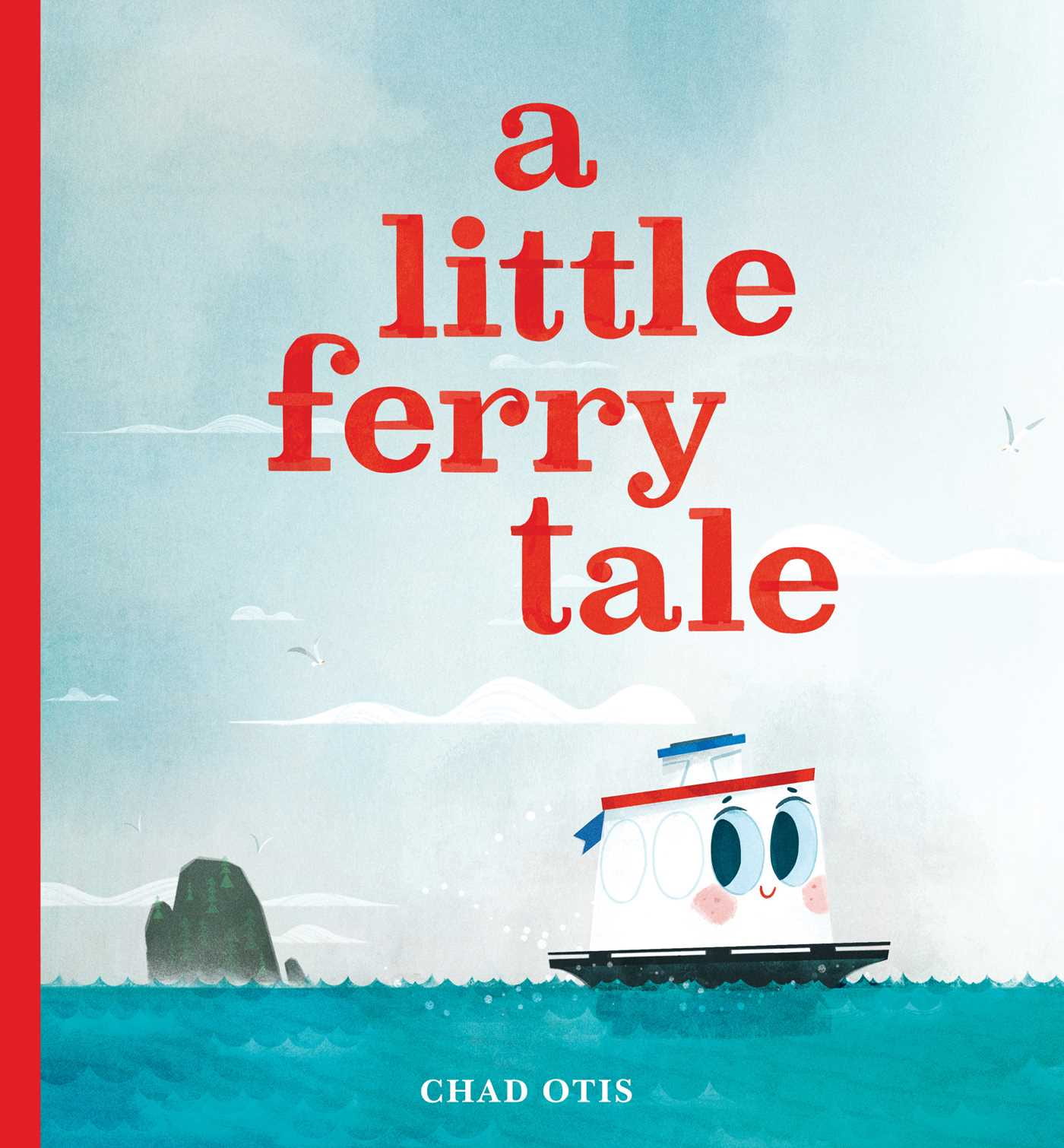
Elem. – A Little Ferry Tale

Otis, Chad. A Little Ferry Tale. Atheneum Books for Young Readers, 2022. 978-1-534-48769-7. Unpaged. $18.99. Grades PreK-1.

Hey look, Little Toot, there’s a newcomer on the dock and her name is Little Ferry. Ferry is a small boat with big aspirations, and her job is to carry passengers from the mainland to the island and back again. She looks at other vessels in the harbor and observes people admiring the sailboat’s gracefulness, the tugboat’s fearlessness, and the speedboat’s power. Ferry never receives such accolades and feels insignificant compared with the other watercraft, wishing she could trade places with them. She decides to follow in their wake by going fast, facing large boats, and being carefree, but Ferry finds she has trouble doing that. As the little boat sadly returns to the pier with her passengers, Tugboat raises an alarm of fire on the island. All of the boats in the harbor know that animals live there and rush to rescue them. Speedboat and Tugboat frighten the animals as they approach the shore, and Sailboat gets hung up on the rocks. Only Little Ferry, after summoning up her courage, is able to bring all of them on board and transport them safely to the dock. The small boat realizes that her patience and carefulness are qualities that also have value. The message here is to be true to yourself. The author-illustrator has created digital illustrations that bring out each boat’s personality. The drawings of the characters with their large eyes and expressive mouths will draw in young readers.

THOUGHTS: This charming picture book will be a hit with children, who will want to read it again and again. It is a good example of personification. Pair this marine newcomer with the classic Little Toot for a nautical themed story time. Recommended.

Picture Book           Denise Medwick, Retired, PSLA Member

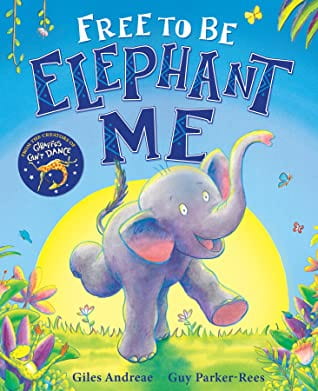
Elem. – Free to Be Elephant Me

Andreae, Giles. Free to Be Elephant Me. Orchard Books, 2021. 978-1-338-734270. Unpaged. $16.91. Grades PreK-2.

Giles Andreae and Guy Parker-Rees, the duo behind Giraffes Can’t Dance, teamed up to create the story of elephant Num-Num, a little elephant searching for his special gifts. It’s tradition for all young elephants to perform in front of king Elephant Mighty to showcase their talents and be given an elephant name like Elephant Noisy to the little one who can trumpet loudest or Elephant Strong to the little one who can rip a tree right from the ground. Num-Num doesn’t believe that he has any special talents and after a dismal performance and an unkind mocking by the king, he leaves and travels far away where he makes a new home by a watering hole. Over time, Num-Num makes many friends who assure him that he is perfect the way he is and that his talents involve being kind and simply being himself. Num-Num, supported by many animal friends, returns to the elephants and tells Elephant Mighty that he’d like to be called Elephant Me because “…the hardest thing sometimes is just to be you and to know being you is enough.” Elephant Mighty seems to truly understand and even reveals that he often feels stifled by his name and role, and the tale ends happily with a dance-filled celebration.

THOUGHTS: A simple, attractive rhyming story that may help convey ideas of self-acceptance to little readers. 

Picture Book          Lindsey Long, Lower Dauphin SD

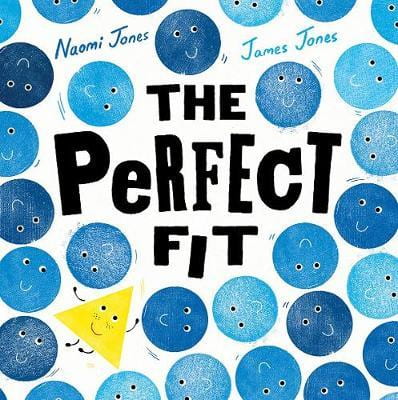
Elem. – The Perfect Fit

Jones, Naomi. The Perfect Fit. 1st American ed., Kane Miller, 2021. 978-1-684-64141-3. Unpaged. $14.99. Grades K-3.

Triangle loved playing with the circles, but sometimes she felt a bit different. She couldn’t roll like the circles and often felt like she was getting in their way. Therefore, she set off in search of friends who were more like her. She played with some squares, but soon realized she couldn’t stack like them. She played with the hexagons, but found that she kept messing up their pattern. Finally, Triangle discovered other triangles who were exactly like her. However, it wasn’t long before Triangle realized that it was a lot more fun for all of the shapes to play together. A cute story with a strong positive message about acceptance and inclusion, this book would be an excellent addition to any elementary collection.

THOUGHTS: I love the many ways in which this book could be used in an elementary setting. It could be used to introduce geometrical shapes and patterns, or it could be used to initiate a discussion about acceptance and inclusion. Pair it with other titles that celebrate diversity and differences, such as Lisa Mantchev’s Strictly No Elephants (2015) and Todd Parr’s It’s Okay to Be Different (2001).

Picture Book          Julie Ritter, PSLA Member