MG – A Strange Thing Happened in Cherry Hall

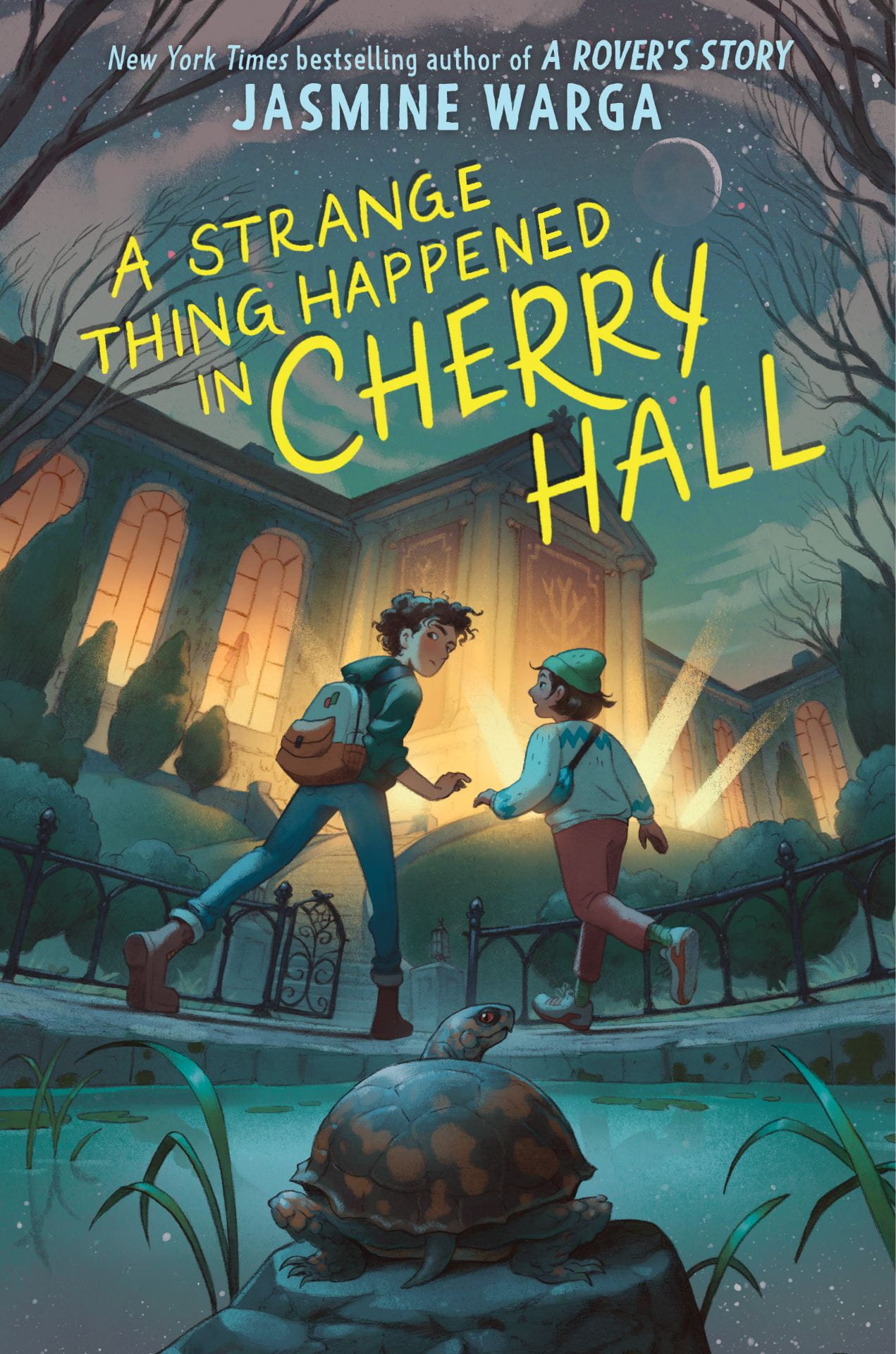
Warga, Jasmine. A Strange Thing Happened in Cherry Hall. HarperCollins, 2024. 978-0-062-95670-5. $19.99. 224 p. Grades 4-8.

Rami Ahmed is not having a very good sixth-grade year. For some reason, his best friends have abandoned him in middle school, he feels invisible, and he is wondering more about his dad who abandoned him and his mother when Rami was two. Now, someone has stolen Untitled, pastoral painting from the Penelope L. Brooks Museum, where his mother heads the custodial staff. As suspicion falls on her, Rami’s worries are compounded by the sight of a ghost-like young girl floating around the museum who coincidentally resembles the girl in the missing painting. At a chance meeting at the local library, Rami bumps into Veda, a school friend, who has her own theories about the museum heist. When they team up to test those theories and vindicate Rami’s mom, Rami discovers Veda also can see and communicate with the figure that they rename Blue. Loud, talkative Veda shares an immigrant parent (Rami’s mother is Lebanese and Veda’s is from India) with Rami, is as interested in solving the mystery as he is, and has a plan. As the two travel around their small town of Maple Lake piecing together their clues, the reader is privy to the thoughts and activities of Agatha the turtle that resides in the museum’s garden. In this relatively short text with brief chapters, the writer reveals the painting’s long history interspersed with clues from a wise and brave turtle. Though the ending is a bit abrupt, it promises satisfying results for the characters.

THOUGHTS: With the decrease in children’s reading stamina, it’s good to have a short book to turn to that has the look of an early chapter book, but the depth of story that appeals to an older reader. Rami’s initial awkwardness with people and reticence to divulge his feelings to his mother will relate to many readers. Author Jasmine Warga has tried her hand with different genres and unique plots successfully; this book is no exception. Besides the over-arching story, there is an underbelly here. Rami is sensitive to his mother’s feelings. The reader doesn’t learn why Rami’s father left, aside from the fact his parents were married young. We also don’t really learn about Rami’s estrangement from his friends, other than a rejection suffered at lunch and an embarrassing accident with the lunch tray. The painter of the picture is connected to the person who took it, but we don’t learn much about them either. I think this is all okay, for it gives the reader the chance to form their own conclusions and put their imaginations to good use.

Fantasy/Mystery

MG – Olivetti

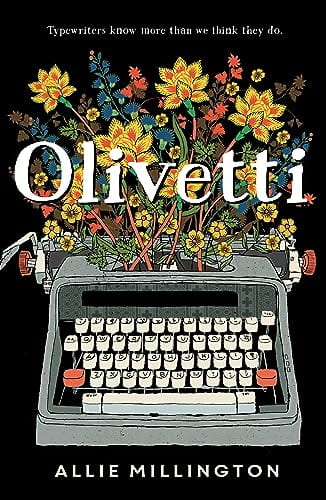
Millington, Allie. Olivetti. Feiwel and Friends, 2024. 978-1-250-32693-5. $17.99. 256 p. Grades 4-8.

The old Olivetti typewriter holds a special place in the Brindle’s home. It conveyed the proposal from Mr. Brindle to his wife. It is a creative plaything in the household. It holds the secret thoughts of Mrs. Brindle, who is now missing. Before she disappeared, leaving her four children and husband, Beatrice Brindle tearfully pawned her treasured typewriter for $126. Now her son, seventh-grade Ernest, feels deep remorse for not speaking to his mother in weeks. He has taken his notebook to their apartment building’s roof pondering his part in his mother’s disappearance. When he finds the typewriter in a local pawnshop, he takes it and makes a startling discovery: the Olivetti magically communicates critical information. He resists the help of the sympathetic daughter of the pawnshop owner, but eventually allows her to share in the family’s bewildering search for their beloved mother. Olivetti becomes a character itself and narrates its own chapters, alternating with the human ones. There is a reason Beatrice Brindle left her family: her cancer has recurred, and she doesn’t want to burden her family. Olivetti is a precious tale highlighting family, friendship, grief, and hope. The language and back and forth plot make the book interesting, and students who experience family illnesses may identify with the Brindle’s struggles. The author describes the family as “copper colored.”

THOUGHTS: Typewriters to students today are antiques. The plot idea of a talking typewriter sharing important clues that lead the Brindle family back to their mother is unique. Olivetti is a quick read, albeit swathed in sadness. Debut author Allie Millington keeps moments light while dealing with a heavy topic.

Realistic Fiction

The Brindles once were a happy family. They enjoyed books, building blanket forts, using their imaginations, and writing stories on their beloved Olivetti typewriter. With two caring parents, the four Brindle children were thriving until news of their mother Beatrice’s cancer diagnosis upended their lives. Beatrice survives, yet everything has changed. Felix, their father, has taken an office job and is never around. Worse yet, when he is home he is glued to his electronics. Beatrice has packed away her typewriter and now uses a laptop. The children grow and pursue their own separate interests. Increasingly, Ernest feels more and more isolated. Anxious and socially awkward, Ernest feels like no one understands him. Even his own family pokes fun at his obsession with dictionaries and his desire to spend time alone on the roof of their apartment building. Ernest’s relationship with his mother has become one filled with nagging and bickering. When Beatrice suddenly and mysteriously goes missing, the family is thrown into chaos once again. Convinced Beatrice has left because of their fighting, Ernest pastes missing person notices around town. When he stops at the local pawn shop to hang a poster, Ernest discovers that his mother sold her beloved Olivetti typewriter for $126 right before going missing. Distraught, Ernest steals the typewriter and discovers that Olivetti is magical. Olivetti can not only communicate, he can remember every word, every sentence, every paragraph ever typed on his keys. Together Ernest and Olivetti, (with the help of a new friend, the town librarian, and the building maintenance man) solve the mystery of Beatrice’s disappearance, reunite the family, and learn that any crisis can be overcome with communication and love.

THOUGHTS: Though delightfully quirky, this story tackles many tough topics earnestly through alternating chapters revealing the perspectives of both Ernest and Olivetti. Millington not only explores how communication evolves as family dynamics grow and change, but also examines how technology can both enhance and hinder how families communicate.

Magical Realism

YA FIC – Piecing Me Together; Lost Girl of Astor Street; No Tomorrow

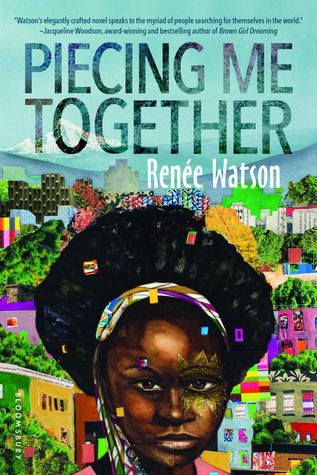
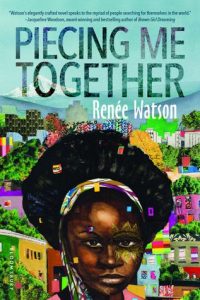
Watson, Renée.  Piecing Me Together.  Bloomsbury, 2017.  978-1-68119-105-8. 264 p. $17.99. Gr. 8 and up.

Jade, an African American teenager, has spent her high school career torn between two worlds. She lives with her mother and uncle in a poor neighborhood in Portland, where she has many close friends she has known since childhood.  However, she rides the bus across town every weekday to attend a prestigious private high school on a scholarship. When the guidance counselor offers her the opportunity to participate in a “Woman to Woman” mentoring program, Jade jumps at the opportunity to attend outings and establish connections with other successful black women.  She soon finds, however, that her mentor treats Jade as though she is a charity case rather than teaching her anything relevant and useful. If she hopes to get anything out of the mentoring program, Jade must learn to speak up and advocate for herself. The power of friendship and art (which Jade uses as an outlet to express her feelings) shine through in this thought-provoking novel about race, privilege, and finding one’s voice. THOUGHTS: Race, gender, class, privilege, and police brutality all seem to be common themes in young adult literature this year.  This title, a 2018 Newbery Honor book and Coretta Scott King Author Award winner, includes all of these themes and is not to be overlooked.  Not only would the book spark insightful discussions about these relevant issues, but it would also stir readers to fight for the change they wish to see in the world.  Short chapters and a lovable protagonist who readers will want to see succeed make this a quick and inspiring read.

Realistic Fiction      Julie Ritter, Montoursville Area High School
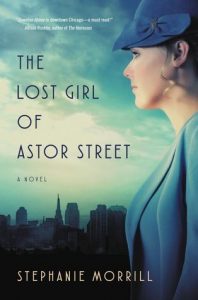
 

Morrill, Stephanie. The Lost Girl of Astor Street. Blink, 2017. 978-0-310-75838-9. $17.99. 349p. Gr. 7-12.
Eighteen year old Piper Sail is living a life of privilege in 1920s Chicago, her life seemingly unaffected by the criminal element (mobsters, speakeasies, etc.) present in the city. Her biggest problem is being considered a bit of a rebel and a non-conformist by those around her. All that changes one spring day when Lydia, Piper’s best friend and next-door neighbor, disappears one day when walking home. Piper is convinced that Lydia did not leave willingly; she didn’t leave a letter or say goodbye. Dissatisfied with the investigation into Lydia’s disappearance, Piper decides to do some sleuthing on her own. Working with police Detective Mariano Cassano, Piper begins to look into her neighbors, their servants, and even her own family in order to find out the truth. What she discovers is everyone is harboring secrets, even Detective Cassano. Will Piper be able to solve the crime or have her actions placed her own life in peril? THOUGHTS: Readers will quickly find themselves caught up in this engaging whodunit set in the evocative atmosphere of Prohibition Chicago. Piper must face down numerous misdirections as she pursues the reasons for Lydia’s disappearance–keeping her (and the reader) guessing. A touch of romance enters the storyline with the appearance of the smart and talented Detective Cassano. Hand this one to fans of history and mystery.
Historical Mystery (1920s)       Elizabeth Henry, Lampeter-Strasburg School District
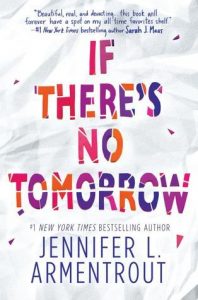
 

Armentrout, Jennifer L. If There’s No Tomorrow. Harlequin Teen, 2017. 978-0-373-21222-4. 384 p. $18.99. Gr. 9 and up.

One decision, one split second choice changes Lena’s life forever. Before she was carefree. She was looking forward to volleyball season, applying to college, and enjoying her senior year. Now, Lena hides from everyone, herself included, and she can’t forgive herself for what happened. Unable to move on, Lena withdraws from everyone who cares about her – from everyone trying to help. THOUGHTS: Readers will be haunted by Lena’s isolation, but they will root for her as she tries to find herself in her new reality. It is difficult to describe too much without giving the story away, but this is a book every teen should read. It covers so many weighty issues and insecurities that many teens manage and does so beautifully as the narrator struggles to accept her choices. This book will stay with readers long after they read it and will (hopefully) make them think twice before making the same choice as Lena.

Realistic Fiction       Maryalice Bond, South Middleton School District

 

West, Kasie. Love, Life, and the List. Harper Teen, 2018. 978-0062675774. 384 p. $17.99. Gr. 9 and up.

This story, while at times predictable, does offer an interesting perspective into the life of one teenager. Though two of her best friends are traveling or working over the summer, Abby is staying in her hometown with her best friend (and secret crush) Cooper. An aspiring painter, she is devastated when the curator at the museum where she works rejects her pieces, stating that they “have no heart.” Abby, taking the advice of her mom and grandfather, comes up with a list of experiences that she hopes will enhance and enliven her art. Her list includes, for example: face a fear, fall in love, and learn a stranger’s story. Abby’s interactions with Cooper prevail throughout the novel (and can be annoying at times), but the self-awareness that she develops as a result of the list is inspirational. Abby also must deal with her mother’s debilitating anxiety and a father who is stationed abroad. THOUGHTS: While not my top pick for YA novels, this title does encourage teens to think about their lives, and how they can go beyond their everyday existence to discover new parts of the world.

Realistic Fiction      Lindsey Myers, Shady Side Academy Senior School