YA – Atmosphere: A Love Story

Reid, Taylor Jenkins. Atmosphere: A Love Story. Ballantine Books, 2025. 978-0-593-15871-5. 352 p. $30. Grades 10-12.

Jane knows that she has what it takes to be an astronaut but is still in awe to find herself in one of the early training programs for the space shuttle missions. As she and the other recruits move through the selection and training process, they also navigate their interpersonal relationships, many of which they have to keep hidden. This is especially true for the women who need to prove themselves as the first females to go into space. Along the way, these extraordinary people learn to care about one another, especially when they are challenged by a catastrophe that threatens their lives and connections to those they love on earth.

THOUGHTS: There is already a lot of hype about this book, so this review is more to highlight that it’s a great addition for a high school library. Many teens will already be Taylor Jenkins Reid fans because of her previously popular books, so it’s good to know that this one also has a place in the school library. The romance is lush, but not too steamy. It feels especially good to have a novel that focuses on women in science. It will be easy to convince a lot of readers to try this thrilling book. 

Historical Fiction

YA – Everything Is Poison

McCullough, Joy. Everything Is Poison. Dutton Books for Young Readers, 2025. 978-0-593-85587-4. $19.99. 304 p. Grades 9-12.

McCullough (Blood Water Paint, 2018; Enter the Body, 2023) returns with another powerful young adult historical fiction that transports readers to 17th Century Rome. Carmela Tofana is desperate to follow in her mother’s footsteps in their family’s apothecary La Tofana. Finally on her 16th birthday, Carmela is permitted to accompany the women of the apothecary into the workroom where all the ingredients for the magical remedies are stored. Often feeling like she’s in the way but desperate to prove that she belongs there, Carmela struggles to find her place among the respected (and sometimes feared) healers. As she masters simple remedies and the art of watching her tongue while working with customers, Carmela begins to blossom. However, there are remedies and secrets Carmela never knew about as a naive child. Some clients come to the apothecary and are seeking a last resort cure. When Carmela is faced with helping a peer who has been nothing but unkind to her, she has to decide who she will be and if she is cut out for the work of an apothecary woman.  

THOUGHTS: Filled with beautiful descriptions of plants and historical architecture, McCullough’s newest novel will fill a gap in older historical fiction, shining a light on women at a time when they were not recognized as powerful. This is more than just a historical fiction, so readers will enjoy the strong female friendships and familial relationships. Highly recommended for high school collections. 

Historical Fiction

Elem./MG – Force of Nature

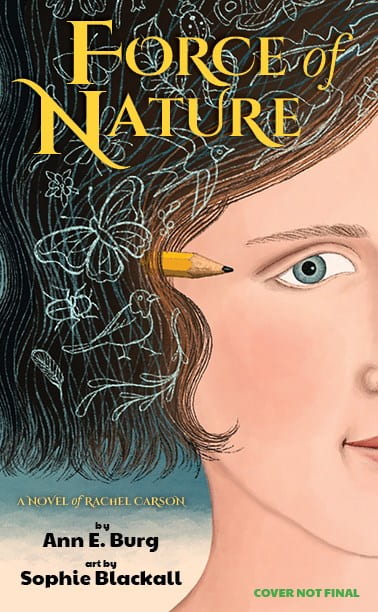
Burg, Ann E. Force of Nature: A Novel of Rachel Carson. Illustrated by Sophie Blackwell. Scholastic Press, 2024. 978-1-338-88338-1. 304 p. $19.99. Grades 3-7.

Ann E. Burg’s well-researched historical novel-in-verse explores Rachel Carson’s life and research. Rachel Carson is best known as the groundbreaking American environmental conservationist who wrote Silent Spring. This fictionalized account follows Carson’s life through her first-person perspective. The story begins with Carson’s childhood during World War I and ends with her death in 1964. Throughout this telling, we also follow Carson’s family and collegial relationships through time, including the close bond she held with her nieces and great-nephew (although she had no children of her own). Carson journeys to college and then onward to obtain her masters degree at Johns Hopkins University. There, she marries her talent of writing with her scientific expertise in order to produce widely read and understood arguments about nature. She wins a National Book Award for The Sea Around Us (1952), and Silent Spring follows in 1962. Carson’s work largely catalyzed the modern environmental movement.

THOUGHTS: Force of Nature’s accessible format will allow upper elementary and middle school students to explore Carson’s story and her legacy. Students who love nature and biology will feel inspired by Ann E. Burg’s novel in verse long before they may actually read Silent Spring or other full-length nonfiction books about climate conservation. The story is also filled with moments highlighting nature’s quiet beauty. Burg does an excellent job of humanizing Carson and framing her as a pioneer for future female scientists. While this story can be read and enjoyed by anyone, students without background knowledge or strong inference skills may miss historical references in Force of Nature because they are written so subtly. Recommended for addition to upper elementary and middle school collections where historical fiction and verse memoirs are popular.

Historical Fiction

YA – Dear Medusa

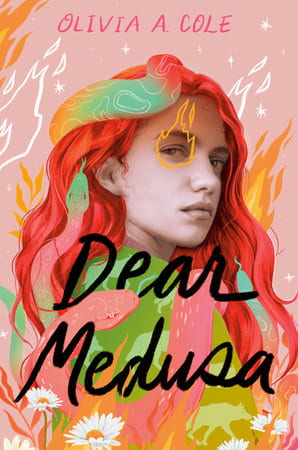
Cole, Olivia A. Dear Medusa. Labyrinth Books, 2023. 978-0-593-48573-6.  377 p. $18.99. Grades 9-12.

This feminist novel in verse interspersed with texts details the aftermath of Alicia, a young white girl, presumably from Ohio, who has been sexually abused by a seemingly affable, popular teacher whom the reader never meets. Alicia’s parents are recently divorced because of her father’s infidelity; her mother is depressed and her once-accomplished older brother takes to hanging out with a less desirable, racist group of boys. Traumatized by her sexual experience which she has kept secret, Alicia has lost her best friend, dropped out of her beloved track team, and resorted to bad behavior and casual sex with random partners, often men older than she. She is well aware of her bisexuality and her sensual effect on men. Now in her junior year of high school, she starts getting unsigned notes in her locker implying a commiseration. She takes some refuge in her job at the fast food restaurant, Meat Palace–at least when her creepy manager isn’t present, and the support of two new friends: Deja, a straight-talking African American asexual girl and Geneva, a intuitive Pakistani girl who proves to be Alicia’s love interest. As the school year progresses Alicia grows deeper into depression. Though readers are given no description of the abuse, they learn that Alicia returned to her abuser several times. Alicia infers her feelings of guilt and compunction for this conduct.When she is chosen to be part of special all-female study led by a charismatic visiting professor, she starts to find her voice and finally makes a connection with the secret note-writer who has also suffered sexual abuse from the same teacher. The professor encourages the girls to accept their sexuality and speak frankly of sexual matters. In the end, the other girl reveals the abuse to the authorities, but Alicia finds a new sense of freedom and a new connection with her mother.

THOUGHTS: This dark story takes the reader within the mind of a sexually abused girl who reacts to this trauma by taking random sexual partners, often older than herself. It contains some foul language, but no graphic descriptions of her sexual encounters. The writing is the highlight of this novel, but the story is a sad and troubled one. Not many adults come off well in this story, only Alicia’s mother finally comes to her aid and one older co-worker at the Meat Palace.

Realistic Fiction      

YA – Enter the Body

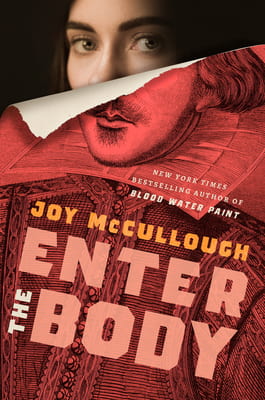
McCullough, Joy. Enter the Body. Dutton Books for Young Readers, 2023. 978-0-593-40675-5 . 336 p. $18.99. Grades 9-12.

Question: What happens when you place Juliet, Ophelia, Cordelia, and Lavinia in a room beneath the famous Bard’s stage? Answer: They develop a voice and get to tell their story, their way. It sounds like a corny joke but is anything except a joking matter. All wronged by their co-stars and the famous Bard, each young woman has the opportunity to talk through (when able) her experiences in what reads like a group therapy session. The women are given the chance to decide how they would have done things differently if given another occasion and the ability to make their own decisions. Familiarity with Shakespeare’s Romeo and Juliet, Hamlet, King Lear, and Titus Andronicus (I was familiar with all but the last) is helpful for context but not a necessity. Naive readers – or those not familiar with the plays – may miss the seriousness of this tale (all of these characters were seriously wronged and are dead) but will enjoy the story nonetheless. At times this novel in verse reads like a teenage sleepover, with characters constantly interrupting each other. McCullough brings a contemporary voice to these classic characters that will resonate with today’s readers.

THOUGHTS: The audiobook is outstanding! One does not need to like Shakespeare or classic literature and plays – I am not a fan of either – to be moved by Enter the Body. Highly recommended for high school collections.

Historical Fiction

MG – Caprice

Booth, Coe. Caprice. Scholastic, 2022. 978-0-545-93334-6. $17.99. 243 p. Grades 6-8.

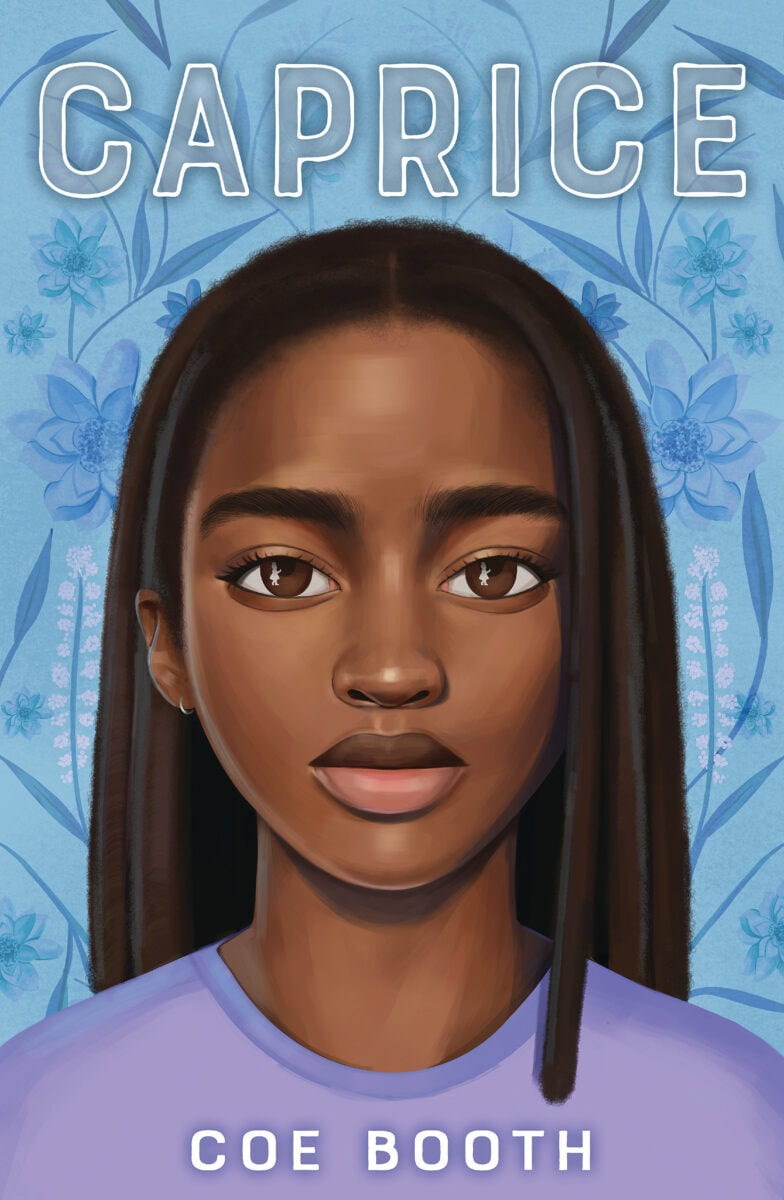
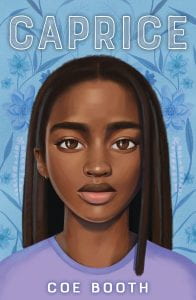
Sensitive, poetical Caprice is a rising eighth grader with a big decision: should she grab the opportunity of attending a prestigious boarding school or stick with her friends in Newark, New Jersey? Though she loved her seven-week stint at summer camp at Ainsley School for Girls, she is torn because of her closeness to her best friend, Nicole, a budding romance with Jarrett, and her commitment to the Center, the community place that fosters fun and leadership in her neighborhood. Through her poems and flashbacks, the reader learns of sexual abuse that Caprice keeps buried and secreted from her family. She is considerate of her parents’ precarious financial situation because of their faltering business and is scared that her need to be in Newark keeps her mother and father apart. Her return home a week before school starts corresponds with a call from Baltimore informing the family of her maternal grandmother’s serious illness. Caprice’s mother and grandmother have been estranged since Caprice was four-years-old when her grandmother sent Caprice and her mother away from the family home after a dangerous incident. Only Caprice and her grandmother know the real reason for their banishment, but her mother has lived all these years with hurt and resentment, alienated from her mother and brother, Raymond. The reader meets Caprice over an important week when school, friendships, and soul-searching come to a head. Her sporadic panic attacks increase, and she waffles between closing herself off and speaking up for herself in new ways. In Caprice, Coe Booth tackles a difficult topic by mining the memories and feelings of Caprice as she faces her demons and challenges herself to esteem who she is. Caprice’s immediate family is loving and communicative. Her friendships with both adults and kids at the Center are genuine and nicely developed. Though the confrontation with her abuser at story’s end avoids any expected messiness and description, the emotions Caprice experiences throughout the novel will resonate with many readers dealing with changes in their lives. The students at Ainsley are international: New Zealand, Ghana, Toronto. Race is not mentioned directly in the book; however, Caprice gets her locs done and the book’s cover art displays an African American girl, so there are implications that the other characters are African American.

THOUGHTS: Coe Booth lets Caprice’s voice come through in the narration and the typical middle school dialogue with which readers will relate. The thriving Center Caprice attends is core to the community and helps to shape the kids who participate in the different activities it affords, from a Women’s Club, to film making, to dance. Caprice takes part in some neat poetry activities that readers can replicate. Her leadership qualities come out in her refusal to be treated less than boys and to tolerate snide remarks about her body. The adults surrounding Caprice–even though they know nothing about her abuse at the time–are nurturing and say the right things. Caprice’s pride in her neighborhood and loyalty to her friends are good discussion points.

Realistic Fiction   Bernadette Cooke   School District of Philadelphia

Twelve-year-old Caprice should be having the time of her life. She just finished a seven week summer program at a prestigious school in upstate New York, and she has now been offered a full scholarship through high school. She has a week to make the decision to accept the scholarship. She returns to her home in Newark, NJ and learns that her grandmother is seriously ill. This brings back the memories of the abuse that she endured while living there with her grandmother and uncle. She has remained quiet about this abuse and has told no one. The deadline to commit to Ainsley is coming closer and closer, and Caprice is struggling with her past while trying to make a decision about her future. 

THOUGHTS: This book is a powerful read for a middle schooler. It addresses the issue of child abuse – sexual and emotional. It could have some triggers for some readers.    

Realistic Fiction          Victoria Dziewulski, Plum Borough SD

Sometimes it’s hard for kids to decide what they want from life, and what they are willing to let go of, until they are faced with some life-changing events. This is certainly true for Caprice, a smart, motivated, and mature 7th grade girl who has just finished an exclusive summer leadership experience at a private school in an affluent part of Washington, D.C. She loved that school, but she also loves her home and friends in urban New Jersey. After she is offered a full scholarship to return to the private school for her 8th grade year, she quickly must decide whether she is willing to give up her familiar home and her best friend in favor of the school opportunity of her dreams. In addition to the stress of her impending education decisions, past childhood trauma and the declining health of a grandmother she hasn’t seen in years add to her troubles. Will Caprice be able to navigate her painful past, her complicated family, and her new and old friendships to see her way to a brighter future?

THOUGHTS: Caprice and her family are warmly drawn, and her friendships feel so real! This book deals with difficult topics including childhood abuse, family secrets, divorce, adolescent feelings, and confusion about the direction and meaning of one’s life, but everything is dealt with a sensitive and graceful hand that still makes the book a pleasure to read and recommend to students.

Realistic Fiction        Erin Faulkner, Cumberland Valley SD

Elem./MG – The Beatryce Prophecy

DiCamillo, Kate. The Beatryce Prophecy.Illustrated by Sophie Blackall. Candlewick Press, 2021. 978-1-536-21361-4. $19.99. 247 p. Grades 3-8.

“There will one day come a girl child who will unseat a king and bring about a great change,” reads the fearsome prophecy which the reader soon discovers is The Beatryce Prophecy. This magical story involves a bald, brave girl in monk’s robes; a gentle monk named Brother Edik who hands out maple candies; a slip of a boy, Jack Dory, orphaned by thieves and nurtured by an old woman—now deceased—Granny Bibspeak; a laughing, runaway king, Cannoc; and a wayward, stubborn but loyal goat, Answelica. Brother Edik comes upon a sickly Beatryce with her goat companion and nurses the girl back to health. He well knows the prophecy and when he discovers Beatryce can read and write, thanks to the foresight of her parents, he protects her by shaving her locks and disguising her as a monk. Twelve-year-old Jack Dory gets dispensed to the Brothers of the Order of the Chronicles of Sorrowing to fetch a monk who can record the last words of a dying soldier and returns with Beatryce and Answelica with the strong directive from the monastery’s abbot not to return. Beatryce, though, cannot stomach the soldier’s confession and abandons the task. She and Jack Dory find themselves in the dangerous dark forest where they meet the jovial Cannoc who eventually tells them he once walked away from the gruesome responsibility of being the king. They seek safety from the king who threatens Beatryce’s life in Cannoc’s cozy tree- trunk home and are soon joined by Brother Edik. When Beatryce is abducted, the remaining four (the goat is included) vow to rescue her. A proverb comes to mind, Pride goes before a fall. The foolish king and his sinister counselor choose murder and lies to soothe their fragile pride: They cannot accept that a girl can read and write at a time when, as Brother Edik tell her, “Only men of God can read, and the king. And tutors and counselors. The people do not know their letters” (140). At its root, The Beatryce Prophecy is a simple good vs. evil story. But simply written it is not. Can any other author repeat a phrase or line with more meaning than Kate DiCamillo? DiCamillo illuminates this unenlightened world with characters who radiate kindness, goodness, and joy. They also turn out to be the strong ones. Perhaps The Beatryce Prophecy is a feminist story, but it is also a story of courage and friendship. In the capable hands of this author, the reader is ever more convinced that what makes the difference in people’s lives is love. . .and stories.

THOUGHTS: As a vehicle for teaching language and imagery, an example of characterization and plot development, The Beatryce Prophecy is a key tool. The story sweeps you up and the words envelope you. A good read aloud.

Historical Fiction          Bernadette Cooke  SD Philadelphia

YA – The Incredible Nellie Bly: Journalist, Investigator, Feminist, and Philanthropist

Cimino, Luciana, and Sergio Algozzino, illustrator. Laura Garofalo, translator. The Incredible Nellie Bly: Journalist, Investigator, Feminist, and Philanthropist. Abrams ComicArts, 2021. 978-1-419-75017-5. 137 p. $24.99. Gr. 8+.

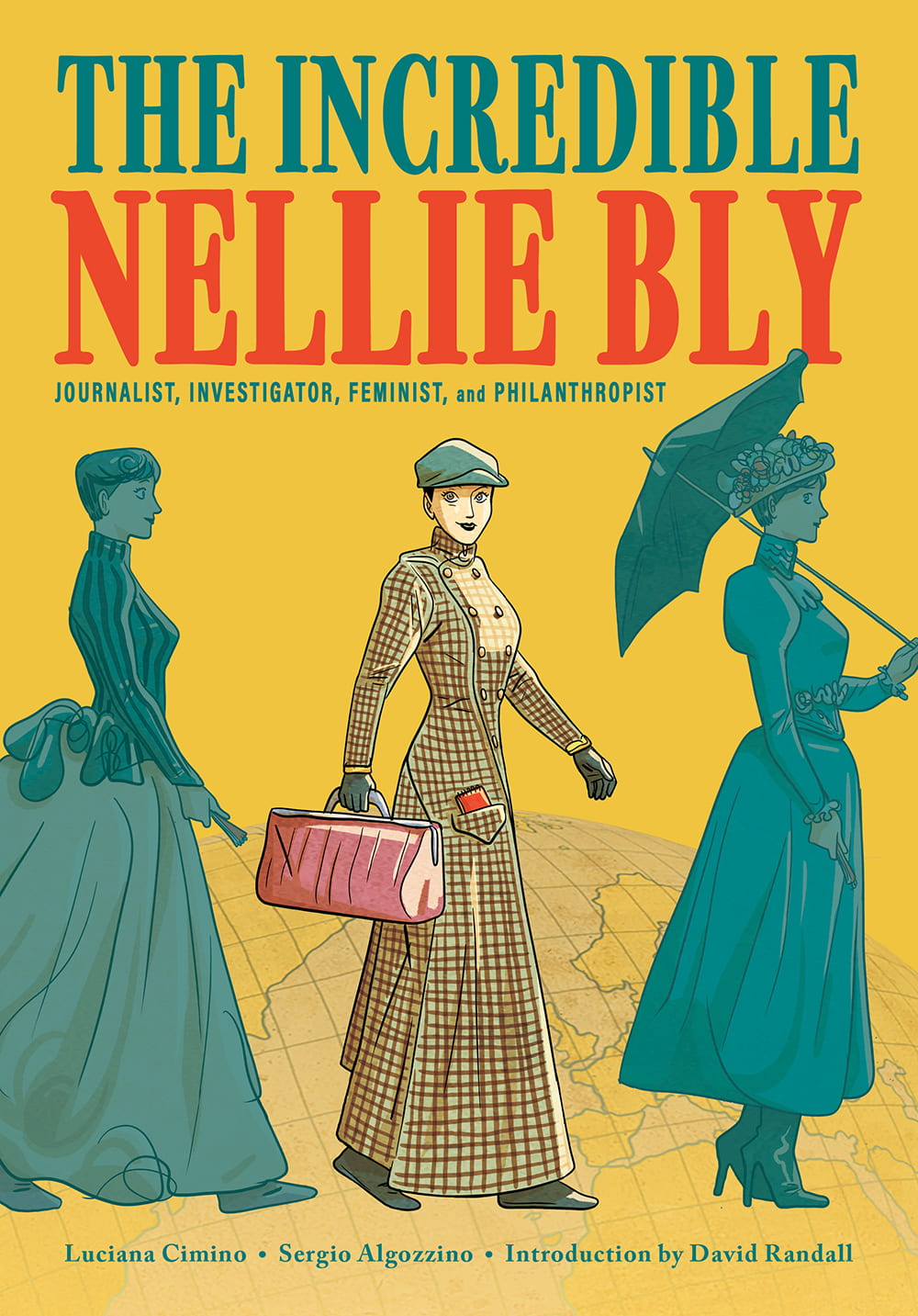
The subtitle of this wonderful graphic biography of Nellie Bly lets readers know that they are about to learn the life story of a true trailblazer! Nellie Bly is maybe most famous for going undercover in 1887 at an asylum for mentally ill women, exposing the horrible treatment patients received there. Her 1889 trip around the world in just seventy-two days is also very well-documented. Within the frame of a series of conversations between a female student at Columbia University’s Journalism School and an elderly Bly, The Incredible Nellie Bly covers these and her many other impressive accomplishments. Such achievements include reporting “in disguise” from a factory and debunking stereotypes about the “immoral” women workers there, interviewing Belva Ann Lockwood (the United States’ first female presidential candidate), and reporting from Europe’s Eastern front during World War I. Her trendsetting celebrity, and the inevitable backlash, are also depicted. Sergio Algozzino’s digitally created artwork, in appealing shades of yellow and blue as represented on the cover, evokes the times in which Nellie Bly lived and worked.

THOUGHTS: This is a – yes – incredible introduction to the extraordinary life and legacy of a woman who never accepted society’s restrictions but was “forever the author of her own destiny” (from the Introduction).

Graphic Biography          Amy V. Pickett, Ridley SD

YA – Six Angry Girls

Kisner, Adrienne. Six Angry Girls. Feiwel and Friends. 2020. 978-1-250-25342-2. $17.99. 262 p. Grades 9-12.

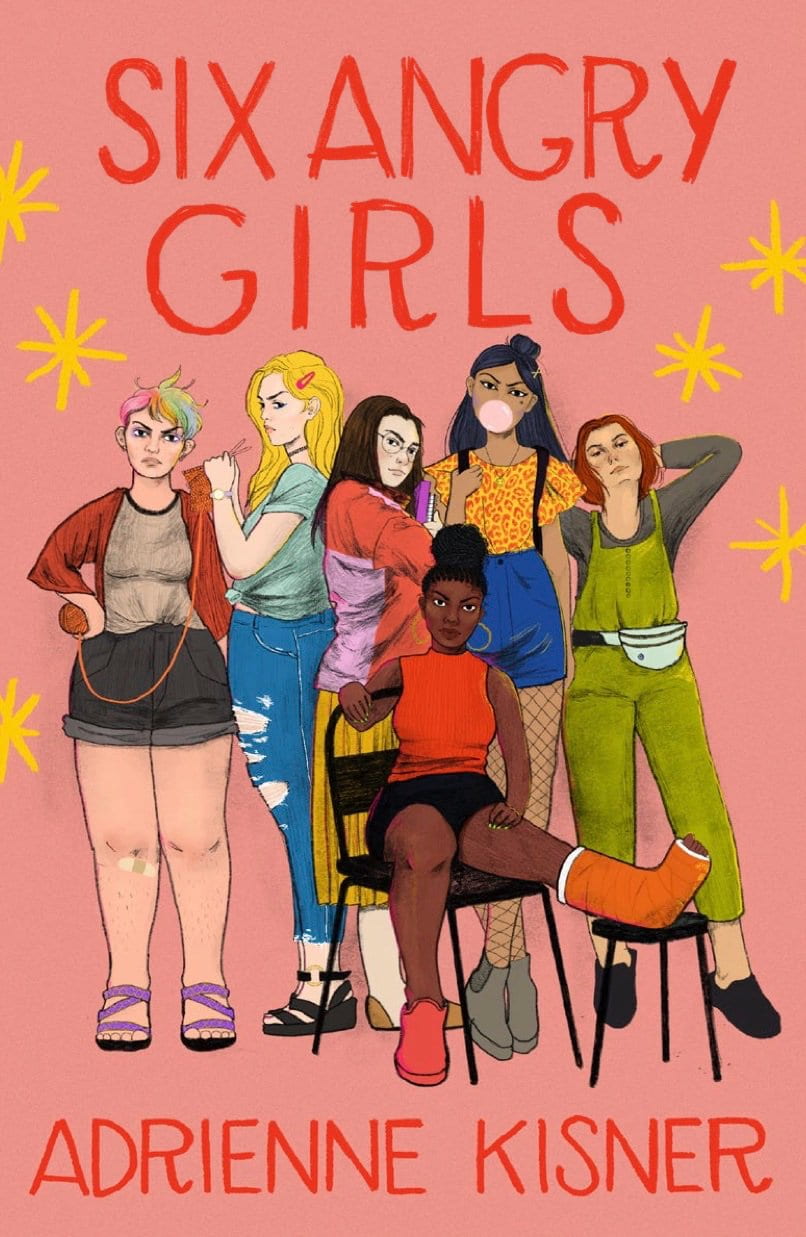
Raina Petree got dumped by big crush boyfriend, Brandon. Emilia Goodwin got dumped by the pompous all-male Mock Trial Team. They join forces to salvage their senior year by forming an all-female Mock Trial Team in their Pittsburgh suburban high school of Steelton drawing on Raina’s drama skills and Millie’s knowledge of the law and research. Adapting the title of the 1950’s movie, Twelve Angry Men, these six angry girls (all but one Caucasian)–overcome heartbreak and self-esteem issues to create a strong challenge to their male counterparts and a serious threat to other Mock Trial Teams as they compete for Nationals. Told in alternating chapters narrated by either Raina or Millie, the book develops a girl power story with the message that people need to stand up for what is right and, especially, stand up for oneself. Author Adrienne Kisner also manages to weave in a subplot involving knitting. Raina searches for an outlet for her grief and joins the knitting group at The Dropped Stitch, a local yarn store. Not only does she learn to cast on and purl, she finds herself involved with activists trying to stop the election of a local magistrate because of his history letting off misogynists and blocking legislation for reproductive rights. Their rebellion manifests itself in yarn-bombing the courthouse with knitted female genitalia. In a twist, the targeted judge turns up volunteering in Mock Trial. At the knitting shop, Raina meets new student Grace who is happy to join an extracurricular activity. Millie falls for Grace and begins to value herself and her time, separating her needs from her helpless father who expects Millie to be chief cook and bottlewasher after her mother moves to Ohio. Though told in a light-hearted manner, the book addresses serious topics, contains a full-range of LBGTQ+ characters, and models the strengths and weaknesses of adults in young people’s lives. What begins as a revenge against the boys story builds with each club meeting, practice, and competition to a triumph of self-identity and self-worth.

Realistic Fiction          Bernadette Cooke, School District of Philadelphia

THOUGHTS: The cover illustration depicts a diverse group of girls, but the two main characters are white. Author Adrienne Kisner is emphasizing gender identity: Millie and Grace form a romantic relationship; Izzy, a minor character, is transgender; the Mock Trial court case for the win centers on gender discrimination. Some parts to be aware of: The Dropped Stitch crew are not shy about using anatomically correct terms, and a smattering of curses appear throughout the dialogue, making it more a high school choice than middle grade. This book has the same feminist fight tone of Moxie by Jennifer Matthieu; and if this suburban, western Pennsylvanian high school resembles yours, Six Angry Girls is an attractive purchase.

MG – Finish the Fight!

Chambers, Veronica and The Staff of the New York Times. Finish the Fight! Versify, 2020. 978-0-358-40830-7. 144 p. $18.99. Grades 3-8. 

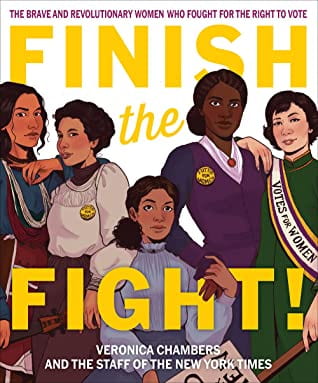
Finish the Fight! is not your momma’s suffrage book! Preceding the introduction, eight playing card style portraits feature commonly known suffragists such as Lucy Stone, Susan B. Anthony, Alice Paul, and Elizabeth Cady Stanton neatly arranged into a two page spread. The page turn reveals a single sentence: “We wanted to tell more of the story” surrounded by numerous, overlapping diverse suffragette playing cards featuring previously unsung heroines and disrupting  the notion of suffrage as a stagnant piece of history. The playing cards speak volumes with bright colors, confident poses, and knowing smiles emphasizing each woman as a force to be reckoned with in her own right. Over 117 years of the Women’s Rights movement are covered beginning with the 1848 Seneca Falls convention, beyond ratification of the 19th amendment in 1920, and through the Equal Rights Voting Act of 1965. Brief chapters filled with accessible text for an elementary to middle grade audience introduce young readers to marginalized aspects of the suffrage movement. Readers will learn about the influence of Native American women including leaders of Haudenosaunee, Omaha, and Dakota-Sioux cultures. Another chapter explains how Juno Frankie Pierce encouraged 2,500 Black women to register for the vote allowing suffragists the numbers they needed to secure ratification of the 19th Amendment in Tennessee. One chapter is dedicated to the nearly disastrous effects of bias within the movement while another focuses specifically on queer leaders and their fight for equality. Primary source documents including posters, photographs, historical documents, and memorabilia are digitally enhanced and positioned throughout the pages with captions. Everything about this book is visually stunning. Portraiture credit is given to eleven artists whose unique styles pay homage to each highlighted woman in preface to her chapter, stunningly capturing her style, time period, and personality. Jovita Idar,  Mexican American journalist/activist and League of Mexican woman founder, is surrounded with southwestern flora and the scales of justice. Mabel Ping-Hua Lee, a sixteen year old Chinese immigrant known for leading one of the biggest suffrage parades in New York history is depicted wearing a sash seated atop a white horse against a backdrop reminiscent of mid-Manhattan’s “Chinatown” neighborhood. Women with a chapter featuring her contribution to the fight include: Francis Ellen Watkins Harper, Josephine St. Pierre Ruffin, Elizabeth Piper Ensley, Mary Church Terrell, Angelina Weld Grimke, Mary Burrill, Ida Wells-Burnett, Susette La Flesche Tibbles, and Zitkala-Sa. Dozens of others are mentioned throughout the text. The trading cards appear again in the backmatter along with succinct biographies of each featured lady.

THOUGHTS: This book is a celebration of the unsung heroines of the suffrage movement, just in time for the 100th anniversary of the ratification of the 19th Amendment. Finish the Fight! is quite possibly the most comprehensive, approachable, inclusive look at the radical fight to secure votes for women. Women’s history is inextricably tangled up with equality and human rights on all fronts. Rarely are the stories of those who worked in parallel to obtain rights for BIPOC and LGBTQ folx woven into history books for children. This book is a much needed addition to any elementary or middle grade library collection. Primary source material mixed with modern art and plain text opens the door to use this book in a myriad of ways for research, history, and social studies lessons.

324.6 Voting Rights          Jackie Fulton, Mt. Lebanon SD

Rather than recap stories about the famous white women who fought for women’s rights, this book tells the stories of the African American, Native American, Asian American, and queer women who have made significant contributions but are not as well known as Susan B. Anthony and Elizabeth Cady Stanton. The book explores the history of the women’s suffrage movement including the Declaration of Sentiments, the representative democracy practiced by some Native Americans which gave women power to make choices, and how women helped states ratify the Nineteenth Amendment to ensure it became part of the US. Constitution. The activists featured include Dr. Mary Walker who is the only woman in US history to be awarded the Medal of Honor and Josephine St. Pierre Ruffin who started the first newspaper by and for black women in the US. Readers will be introduced to Angelina Weld Grimke, Mary Burrill, and other women who were part of the LGBTQ community and fought for women’s rights.

THOUGHTS: Readers will be pleasantly surprised by this book, especially those who have preconceived notions about the women’s suffrage movement or those who think it is boring. Give this book as a gift to a history teacher or encourage a history lover to read and learn about the revolutionary acts of women over one hundred years ago. Middle school and high school students will be inspired by many of the women featured in this book and will have a more comprehensive understanding of the women’s suffrage movement.

324.6 Women’s Suffrage     Jaynie Korzi, South Middleton SD